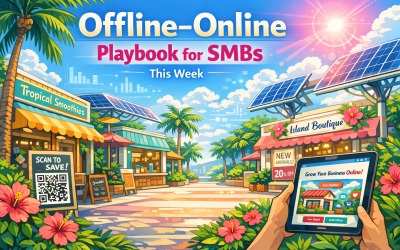
Traditional Marketing Tips and How-To’s for Small Business Owners
In a world saturated with digital campaigns and online ads, traditional marketing still holds power for small businesses. Traditional Marketing Tips and How-To’s for Small Business Owners show practical, trackable offline tactics that can complement your digital efforts, build local presence, and drive measurable results. This guide breaks down proven approaches, step-by-step methods, and simple ways to bridge offline and online for maximum impact.
Why Traditional Marketing Still Delivers for Small Businesses
Traditional marketing remains effective for many SMBs because it reaches local audiences where they live, work, and shop. It often has lower entry barriers and can create lasting impressions through tangible materials and in-person experiences. When paired with digital tracking, traditional marketing tips become a powerful way to build trust, brand recall, and foot traffic.
Key Offline Tactics that Still Drive Results
- Direct mail and print materials: Postcards, flyers, and catalogs can target specific neighborhoods or demographics. Pair them with trackable offers, such as unique codes or QR coupons, to measure response and ROI.
- Local partnerships and co-marketing: Partner with nearby businesses to host events, run joint promotions, or cross-promote services. Shared audiences can amplify reach at a lower cost.
- Events and experiential marketing: Sponsor a local event, host a workshop, or set up a booth at a market. Personal interactions build trust and can drive online sign-ups or visits.
- In-store experiences and signage: Use window decals, in-store banners, and staff training to create a cohesive brand story that resonates offline and online.
- Print advertising and community media: Local newspapers, magazines, and community bulletins can reach a highly relevant audience when integrated with digital follow-ups.
How to Bridge Offline and Online for Measurable ROI
One of the biggest challenges with traditional marketing is measuring impact. The best Traditional Marketing Tips and How-To’s for Small Business Owners focus on bridging offline activities with online results. Here are practical methods:
Use Unique Codes and Landing Pages
- Create unique discount codes on direct mail pieces and print ads to attribute sales or inquiries to a specific channel.
- Direct customers to a dedicated landing page tailored to the offline campaign. Track visits, sign-ups, and conversions from that page to gauge effectiveness.
Incorporate QR Codes
- Place QR codes on flyers, receipts, and posters that lead to a special offer, event RSVP, or a content download. This makes it easy to measure engagement and route people to valuable online experiences.
Ask About How Customers Found You
- Train staff to ask a simple question at order or service: “How did you hear about us?” Track responses to understand which offline channels perform best.
Local Presence: Building Trust Through Community Ties
Small businesses win when they become a visible, trusted part of the local ecosystem. Traditional Marketing Tips emphasize local connections and consistent branding across all touchpoints. Consider:
- Partner with neighborhood organizations or schools for events and sponsorships aligned with your brand values.
- Offer exclusive in-store experiences for local residents, paired with online sign-ups or loyalty programs.
- Encourageatisfied customers to share their experiences through offline-to-online referrals and testimonials that you amplify digitally.
A 4-Week Action Plan You Can Implement Now
Use this practical, four-week plan to start integrating Traditional Marketing Tips and How-To’s for Small Business Owners into your calendar. Each week blends offline activities with online tracking to yield measurable ROI.
Week 1 — Define SMART offline goals and audiences
- Set SMART objectives for your offline campaigns (e.g., increase in-store visits by 15% in 30 days).
- Identify the local audiences most likely to respond to your offers and align creative messaging with their needs.
- Choose 2–3 offline channels to test (direct mail, events, local partnerships) and plan corresponding online follow-ups (landing pages, email capture).
Week 2 — Launch a tracked offline initiative
- Roll out your offline tactic with clear messaging and a trackable element (coupon code, QR code, or dedicated landing page).
- Ensure your online assets (landing pages, forms, and thank-you pages) are optimized for conversions.
Week 3 — Optimize creative and messaging
- Test variations of headlines, visuals, and offers across both offline and online assets.
- Refine targeting based on early response data and customer feedback.
Week 4 — Measure, learn, and scale
- Analyze the data from codes, landing pages, and conversions. Determine which channels delivered the best ROI.
- Reallocate budget to the top-performing tactics and plan for continued optimization in the next month.
Budgeting and Resource Allocation for Traditional Marketing Tips
Begin with a modest budget that allows you to test a few offline channels. Track ROI with simple dashboards that connect offline actions to online results. Prioritize channels with the clearest path to online engagement (landing pages, sign-ups, purchases) and scale the ones that demonstrate tangible returns.
Common Mistakes to Avoid
- Inconsistent branding across offline and online channels. Create a cohesive style guide and ensure all materials reflect your brand consistently.
- Underestimating the power of measurement. Use trackable codes, landing pages, and simple analytics to attribute results accurately.
- Overreliance on a single channel. Diversify channels to avoid putting all marketing eggs in one basket.
- Neglecting follow-up. Offline efforts must be complemented by timely online engagement to convert awareness into action.
Case Studies: Real-World Examples (Inspiration)
Many small businesses have successfully blended traditional and digital tactics. For example, a local shop ran a direct mail campaign with a QR code leading to a product page, paired with a weekend in-store event. The result was a measurable uptick in traffic, sign-ups, and online purchases, illustrating how offline tactics can translate into online conversions when structured thoughtfully.
Conclusion: Traditional Marketing Still Has a Place
Traditional Marketing Tips and How-To’s for Small Business Owners offer practical, actionable guidance for blending offline channels with online measurement to grow local presence and ROI. By pairing tangible experiences with digital tracking, you can create a holistic marketing approach that remains affordable and effective for small businesses.
Need help with your web site, marketing, or AI Agents, call or text us at +1 (863) 225-1713