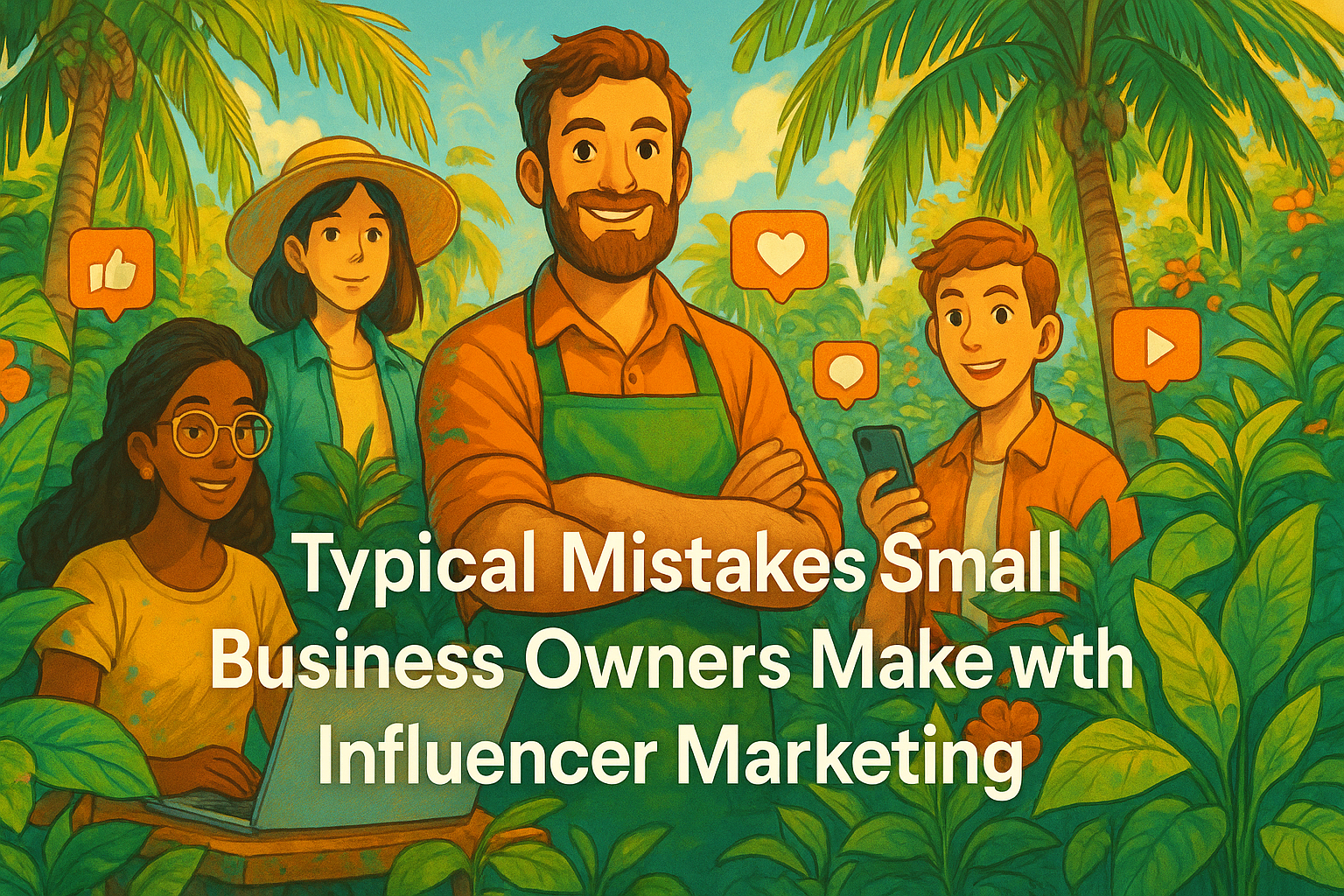
Typical Mistakes Small Business Owners Make with Influencer Marketing
Published on June 16, 2026
Influencer marketing can be a powerful amplifier for a small business, but many owners stumble into predictable traps. Drawing on Tavily’s research and current practitioner discussions, this post outlines Typical Mistakes Small Business Owners Make with Influencer Marketing and offers practical fixes you can apply this week to improve ROI, protect your brand, and build durable creator partnerships.
What Tavily and industry research highlight
Research consistently shows that influencer marketing works best when it’s intentional and measurable. Common missteps include unclear goals, underestimating budgets, and failing to track results. The most successful campaigns align with business objectives, feature authentic creators, and use transparent disclosures so audiences trust the collaboration.
10 Typical Mistakes and How to Fix Them
1) No clear goals or timelines
The problem: Campaigns launch without specific objectives or posting windows, which leads to drift, inconsistent content, and weak impact.
2) Poor influencer-audience alignment
The problem: Partnerships that don’t resonate with your target customers waste time and money.
3) Overreliance on a single creator or a single post
The problem: One-off posts are cheaper upfront but rarely deliver durable results or credibility.
4) Micromanaging content and stifling creator voice
The problem: Rigid scripts make content feel inauthentic and risky to audience trust.
5) Inadequate disclosures and compliance
The problem: Hidden sponsorship damages credibility and can violate platform rules.
6) Failing to educate creators about your product
The problem: Creators who don’t understand your product can’t credibly demonstrate value.
7) Poor tracking and attribution
The problem: Without reliable tracking, it’s hard to prove ROI or optimize campaigns.
8) Budget underestimation or misallocation
The problem: Budgets that are too small or poorly allocated miss opportunities and restrict optimization.
9) Not integrating influencer activity with other channels
The problem: Influencer content isolated from email, paid ads, and your website loses compounding effects.
10) Not preparing for governance, privacy, and ethics
The problem: Inconsistent data handling and governance can erode trust and invite regulatory risk.
A practical starter plan: 4 weeks to momentum
: Choose 1 primary objective (awareness, traffic, or conversions) and shortlist 2–4 micro-influencers whose audiences resemble your buyers. Write a simple outreach template and a basic disclosure plan. : Reach out with a personalized pitch and a concise collaboration brief. Define deliverables (posts, stories, reels) and posting timelines. Establish a straightforward disclosure approach. : Publish content with trackable links or codes. Monitor early engagement and gather audience feedback to refine messaging. : Analyze ROI and engagement. Decide whether to expand to additional creators, extend the partnership, or adjust formats based on data.
Tools and resources to consider
- Influencer discovery and outreach platforms to find micro-influencers
- UGC collection and rights management tools for easy content reuse
- Analytics and attribution tools to measure traffic, engagement, and ROI
- Clear disclosure templates and guidelines to ensure compliance
Measurement and ROI: what to track
- Engagement, reach, and sentiment per creator
- Traffic to landing pages or product pages from influencer content
- Conversions resulting from influencer activity (sales, sign-ups, demos)
- ROI: incremental revenue minus influencer costs and production
- Disclosure compliance and audience trust indicators
Quick templates you can use today
- Outreach template: concise, personalized invite with mutual value and a simple disclosure plan
- Brief template: goals, deliverables, posting schedule, and usage rights
- Tracking template: provide a unique promo code or UTM-tagged link for each creator
Conclusion
Typical Mistakes Small Business Owners Make with Influencer Marketing can derail your campaigns—unless you approach partnerships with clear goals, audience alignment, transparent disclosures, and solid measurement. Start with a lean 4‑week plan, keep a human-in-the-loop for quality, and scale what proves ROI. If you’d like hands-on help crafting a local, ROI-focused influencer strategy or a short-term social calendar, we’re here to help.
Need help with your web site, marketing, or AI Agents, call or text us at +1 (863) 225-1713