Traditional Marketing Tips for Small Business Owners: A Modern Offline-to-Online Playbook
Published on August 25, 2026
Traditional Marketing Tips for Small Business Owners aren’t fossils of a bygone era—they’re a durable framework that, when combined with simple digital touchpoints, can deliver measurable ROI. This post shows how to blend classic offline tactics with modern online tracking to build local trust, drive foot traffic, and grow revenue.
Why Traditional Marketing Tips Still Matter for SMBs
Traditional marketing channels—local partnerships, direct mail, in-person events, and community involvement—remain powerful for reaching nearby customers who value local presence and trust. When paired with easy online follow-through, these channels become trackable and scalable. The goal of Traditional Marketing Tips for Small Business Owners is to create a simple, repeatable process that local customers notice and remember, while also giving you data to optimize over time.
A Practical Offline-to-Online Playbook
This playbook focuses on four weeks of achievable, trackable actions. It emphasizes clear goals, local relevance, and lightweight measurement so you can see what’s moving the needle without getting bogged down in complexity.
Week 1: Define Your Local Audience and Build Local Partnerships
- Map the neighborhoods you serve and identify likely partners (cafes, gyms, co-working spaces, salons, etc.).
- Offer a co-branded promotion or event with a partner to extend reach beyond your own audience.
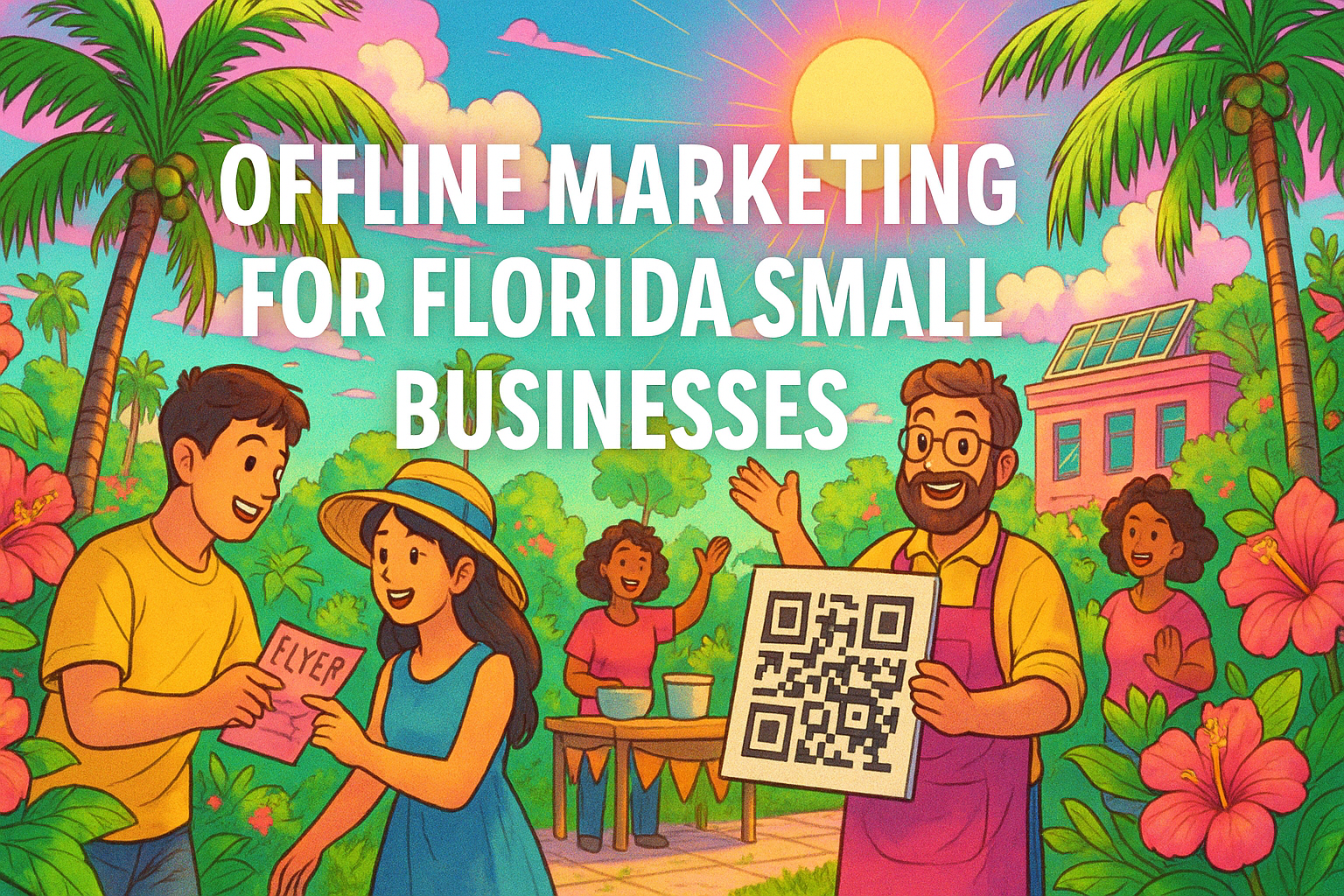
- Use a simple, personalized offer (e.g., “Show this flyer for 10% off your next visit”) and track redemptions with a unique code.
- Set a clear objective for Week 1 (e.g., 50 new warm leads from local partners or 100 coupon redemptions).
Week 2: Bridge Offline Initiatives to Online Tracking
- Incorporate QR codes on all offline materials that link to a dedicated landing page or a form.
- Use unique landing pages or UTMs to attribute online activity to offline campaigns.
- Ask customers to opt in for email updates or a loyalty program during the offline interaction.
- Capture basic data (name, email, consent) and segment responses by channel to compare performance.
Week 3: Host or Sponsor Local Events and Generate Digital Footprint
- Host a small workshop, demo day, or community meet-up relevant to your product or service.
- Promote the event via flyers, local bulletin boards, and partner channels, then amplify with a short follow-up email or social post.
- Deliver a post-event recap online with photos and a call-to-action for attendees to continue the conversation.
- Track attendance, engagement, and post-event conversions to gauge ROI.
Week 4: Measure, Optimize, and Scale
- Review which channels delivered the most qualified leads and conversions.
- Adjust your messaging, offers, and channels based on the data you collected.
- Document a repeatable 4-week cycle you can run quarterly with minor tweaks.
- Invest in one or two high-performing tactics to scale, while maintaining a diverse mix to mitigate risk.
12 Tactics You Can Adopt Today
- Partner with a local business for a joint promotion.
- Distribute simple direct mail with a trackable offer and QR code.
- Host a community event or workshop relevant to your audience.
- Offer in-store handouts that direct customers to a landing page.
- Co-brand materials with recognizable local brands to increase trust.
- Utilize unique discount codes to attribute offline sales to campaigns.
- Incentivize referrals through a straightforward program.
- Collect emails on-site for future promotions and updates.
- Publish a short, local-focused press release about events or partnerships.
- Integrate signage and window displays that reinforce your branding online.
- Track foot traffic and conversions with simple landing pages and codes.
- Test one new offline tactic per quarter to keep the mix fresh and measurable.
Common Mistakes to Avoid with Traditional Marketing
- Failing to localize marketing messages—make offers relevant to the local audience and community.
- Overlooking the offline-to-online bridge—without attribution, you won’t know what’s working.
- Inconsistent branding across channels—keep visuals and messaging cohesive to build trust.
- Neglecting simple tracking methods—UTMs, codes, or landing pages help quantify impact.
- Sinking too much into one channel—diversify to protect against channel shifts and audience preferences.
Resources and Tools to Support Traditional Marketing Tips
- Landing pages or simple microsites for offline promotions
- QR codes tied to campaign-specific landing pages
- Basic UTM tagging for email, print, and event campaigns
- Lead capture forms for on-site promotions
- Template co-branding assets for local partners
Traditional Marketing Tips for Small Business Owners work best when kept simple and actionable. By focusing on local relevance, easy tracking, and a light-touch digital bridge, you can create a reliable, repeatable pipeline that compounds over time.
Need help with your web site, marketing, or AI Agents, call or text us at +1 (863) 225-1713